

Chicken Road Login India: How to Access Your Account Safely

Why does this matter? Because searching for “chiken road login” or “chicken road login” pulls up pages that look like dedicated game portals. Those pages are not connected to InOut Games. They are not connected to any licensed operator. What they actually do ranges from harvesting login credentials to pushing unverified APK files. Knowing where the real login happens — on the operator’s platform — is the first step toward playing safely.
| Detail | Info |
| Game | Chicken Road |
| Provider | InOut Games |
| Own login portal | Does not exist |
| How to access | Through casino platforms that carry InOut Games titles |
| Login credentials | Belong to the casino platform, not to the game |
| 2FA | Depends on the platform’s security settings |
What Does Chicken Road Login Mean
When someone searches for chicken road login, they’re looking for a way to access the game. The answer is indirect. Chicken Road is not a standalone product with its own front door. InOut Games builds the game. Casino operators integrate it. The player logs in to the operator’s platform. Opens the game catalogue. Finds Chicken Road there.
The login credentials belong to the casino platform. Email, password, any two-factor codes. All of it is tied to the operator’s system. Not to InOut Games. Not to Chicken Road as a title. A player who has an account on a platform that carries chicken road games can open the game after logging in. A player without an account needs to register on a platform first.
No separate Chicken Road account exists. No separate Chicken Road password. No separate verification process for the game itself. Everything routes through the operator.
How to Log In to Play Chicken Road Online

The process mirrors logging in to any casino platform. Open the operator’s site in a browser. Find the login button. Enter the account credentials — usually email and password. Complete any additional verification the platform requires. After login, navigate to the game catalogue, find Chicken Road, and open it.
On mobile, the same steps apply. The operator’s site loads in Chrome, Safari, or any current browser. The login form adapts to the screen. Fields accept input from the phone keyboard. After login, the game catalogue is the same as on desktop. Chicken Road loads inside the browser tab.
Some platforms remember the login between sessions through cookies. Opening the site the next day might skip the password step. Others require login every time. The behaviour depends on the platform’s security settings, not on Chicken Road.
Two-factor authentication adds one more step. Password goes in first. Then the platform asks for a six-digit code. The code comes from an authenticator app on the phone, or as an SMS. Changes every thirty seconds. Get it right and the session opens. This layer means a stolen password alone isn’t enough to get into the account.
Registration Before Chicken Road Login
New users can’t log in without an account. Registration comes first.
The registration form on most casino platforms asks for an email address, a password, and sometimes a phone number. Some platforms ask for country of residence during signup. A few ask for date of birth to confirm the user is 18 or older.
After the form goes through, most platforms send a link to the email. Click it. Account goes live. A few platforms skip that step and let the user in right away, then ask for verification later when it’s time to withdraw.
Before creating an account and before depositing any money, reading the platform’s terms and conditions matters. Bonus rules, withdrawal limits, KYC requirements, restricted regions — all of this is spelled out in the terms. Five minutes of reading upfront saves confusion later when the account is funded and play has started.
Not every platform in the search results is real. Check for a gambling licence. Look for the padlock in the address bar. See if deposit limits and self-exclusion options exist somewhere in the settings. Do this before registering. Not after.
KYC, Age Verification and Account Safety
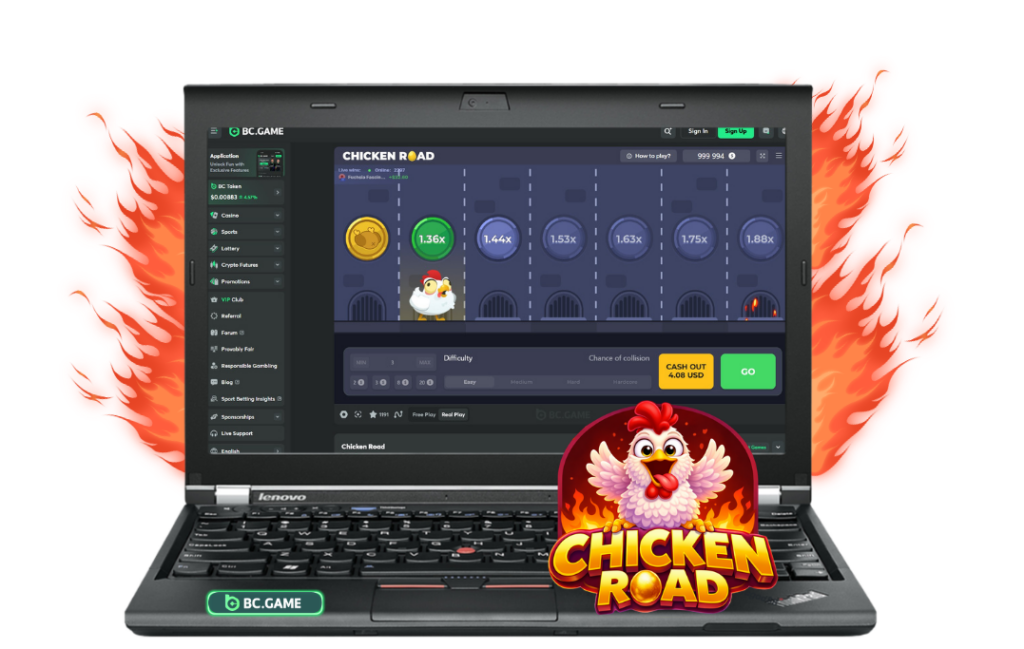
KYC — Know Your Customer. The platform checks that the person behind the account is real and matches the information provided during registration.
Requirements vary by operator and by jurisdiction. Some platforms ask for identity verification before the first deposit. Others wait until the first withdrawal request. A few allow play without KYC up to a certain threshold, then require verification when activity crosses a limit.
The documents requested depend on the platform. ID card. Proof of address. Sometimes a selfie holding the ID. Sometimes nothing at all until a withdrawal triggers the process. No universal KYC checklist applies to every platform hosting chicken road games. Each operator sets its own rules within its licensing requirements.
Age verification is part of the process. Chicken Road is a gambling product. 18+ only. The platform handles age checks through its own procedures.
Account safety sits on the player’s side too. A unique password for the casino account. Not the same one used for email or social media. 2FA turned on if the platform has it. A strong password plus 2FA stops most break-in attempts cold. Without 2FA, a leaked password from another site — a data breach somewhere unrelated — can compromise the casino account if the same password was reused.
Common Chicken Road Login Problems
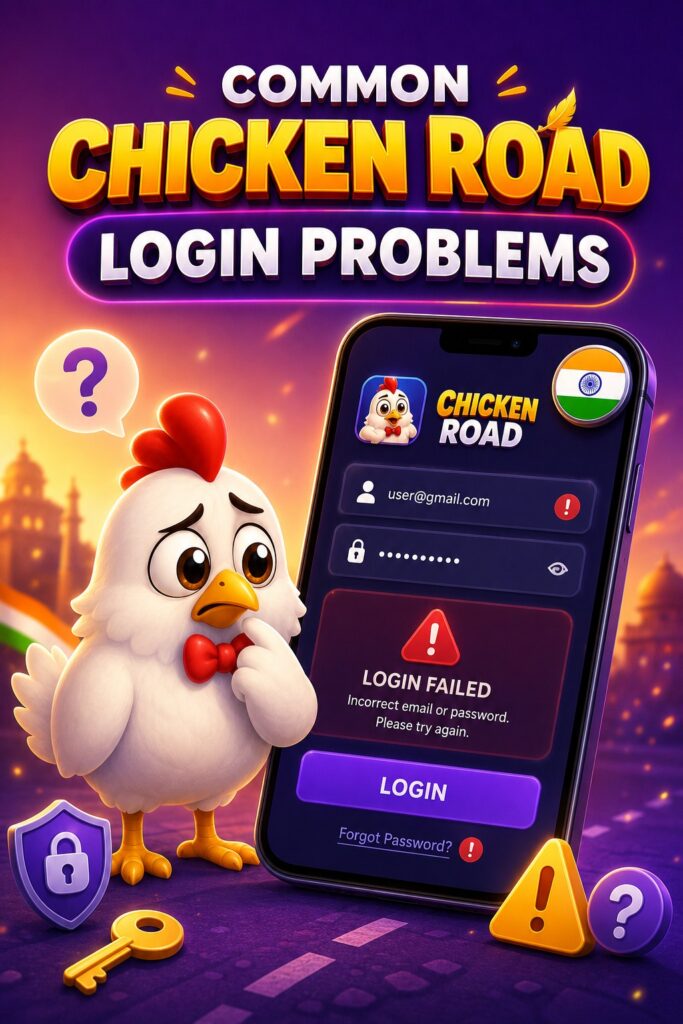
Login failures happen. Most have simple fixes.
- Wrong password. The most common cause. Typos on a phone keyboard. Autocomplete filling in an old password after a recent change. The letter O and the number 0 looking identical on some screens. Best fix: type the password by hand, watching each character. Can’t remember it at all? The reset link on the login page sends a new one to the registered email.
- Account locked after failed attempts. Several wrong passwords in a row trigger a temporary lock on most platforms. Five incorrect entries within a few minutes is a typical threshold. The lock lifts on its own — usually within fifteen minutes to an hour. Waiting it out is the only fix. Contacting support can speed things up but isn’t always necessary.
- OTP not arriving. SMS depends on the phone network. Busy towers, number porting issues, a full inbox — any of these can hold up delivery. An authenticator app on the phone skips the SMS step entirely and works even without cell signal.
- Game not available after login. Logged in fine but Chicken Road isn’t in the catalogue. Could be that the operator dropped it. Could be that InOut Games geo-blocked it for the region. Could be that it’s sitting in a category that hasn’t been checked yet. Typing the name into the search bar inside the catalogue is the fastest way to find out.
- Browser issues. Page won’t load. Login form hangs. Session drops in the middle of a round. Clearing the cache for the operator’s site usually fixes it. Opening the site in a different browser tells whether the problem is specific to one browser. Incognito mode cuts through cached data and extension conflicts at the same time.
- VPN interference. Some platforms check whether the IP address matches the region on the account. A VPN that routes traffic through another country can trigger a block. Turning off the VPN and connecting through a regular Indian internet connection usually resolves it.
How to Identify Fake Chicken Road Login Pages
Fake login pages exist to steal credentials. They mimic the look of a real platform but send the entered data somewhere else entirely. A player who types a username and password into a fake page hands those credentials to whoever built it.
Signs that a login page is not legitimate:
- The domain doesn’t belong to a known licensed operator. Random words, extra dashes, misspellings in the URL
- The page promises guaranteed winnings or “premium access” just for logging in
- The site asks to install an APK before allowing login. Legitimate platforms don’t gate login behind a file download
- No HTTPS. The padlock icon is missing from the address bar
- The page looks like a copy of a well-known casino site but the domain is different
- Pop-ups or redirects fire before the login form appears
A real operator’s login page sits on the operator’s actual domain. It uses HTTPS. It doesn’t promise anything unusual for logging in. It doesn’t require installing files as a prerequisite. If any of these elements are missing, the page deserves zero trust.
Bookmarking the real login page after the first successful visit prevents accidental returns to fake alternatives through search results. One bookmark. Zero risk of landing on the wrong page.
Responsible Access for Indian Players
Chicken Road is a gambling product. 18+. Real money at stake. The 98% RTP means the platform keeps 2% on average over time. Sessions can end with more money or with less. No outcome is guaranteed.
Indian gambling regulation operates at both state and central levels. The rules differ depending on location. Some states have specific positions on online money games. Others work with broader frameworks that don’t address every game type individually. Figuring out what applies is the player’s responsibility. This site does not confirm that real-money access to chicken road is legal in every Indian state.
The game should not be treated as income. Not as a savings strategy. Not as a way to recover money lost elsewhere. It’s entertainment with a price tag that varies by session. Setting a budget before logging in — and stopping when that budget runs out — is the basic habit that keeps things in the entertainment zone.
FAQ
No. Chicken Road runs inside casino platforms. The login belongs to the platform, not to the game. Log in to the operator’s site, find Chicken Road in the catalogue, and open it from there.
A few possible reasons. The operator may not carry the game. InOut Games may restrict it in certain regions. The game might sit in a category the player hasn’t browsed yet. Searching by name in the game catalogue confirms whether it’s available.
On a licensed platform with HTTPS and 2FA — yes. On a random page found through a search engine that asks for credentials before explaining what it is — no. The safety depends entirely on where the login happens.
Some platforms allow demo play without registration. Others require an account first. It depends on the operator. Demo mode uses virtual credits. No real money involved. No withdrawals possible.
Check the domain. If it doesn’t belong to a known licensed operator, leave. Look for HTTPS. Absence of the padlock icon is a red flag. Watch for promises of guaranteed winnings, forced APK downloads before login, or pop-ups. A real login page sits on the operator’s domain, uses encryption, and doesn’t promise anything unusual.